Laboratory discovery
K1 Start
The K1 Start helps researchers move from trial-and-error synthesis to a more controlled experimental process. Develop samples, capture process data and establish a path to pilot validation.
Discuss the K1 Start with an engineer
Challenge

A promising material is not yet a manufacturable product.

  • Slow experimentation: Batch trial-and-error and manual preparation slow down particle and formulation optimisation.
  • Inconsistent quality at scale: Lab recipes often don’t give the reproducibility, documentation or representative samples that industrial adoption needs.
  • Capital-intensive production: Traditional scale-up needs new process engineering, a large footprint and major investment before commercial output is proven.
Solution

One process logic. From the first sample to production.

  • Engineer the material, not just the equipment: Use controlled high-shear mixing to target particle attributes and develop repeatable synthesis conditions.
  • Scale by multiplying controlled processes: Progress through K1, K10 and K100 using shared annular-flow principles and modular engineering.
  • Keep data and process knowledge connected: AMLearn assists with experiment orchestration, process data and optimisation workflows.
Product configuration

Specifications

Use these specifications to determine technical fit, then confirm reactor configuration, reagent chemistry, ancillary processing and operational requirements with the AM team.

FeaturesK1 Start
DosingContinuous Low Pulsation Pumping
Product CollectionNone
Max Number of Reagents2
Automation LevelSingle Batch Dispensing, Manual Cleaning & Loading
Use CasesSingle Batch Synthesis
SensorsPressure
Dimensions21.5 x 5.8 x 2.6cm
Weight200g
Wetted Materials SelectionETFE, PEEK, PP, Quartz
Minimum Micromixing Time0.5 ms
Maximum Shear Rate10⁶ s⁻¹
Maximum Liquid Flowrate (Total)20 mL/min
Maximum Air Flowrate5 L/min
Maximum Pressure7 bar
Reaction Length50 nm
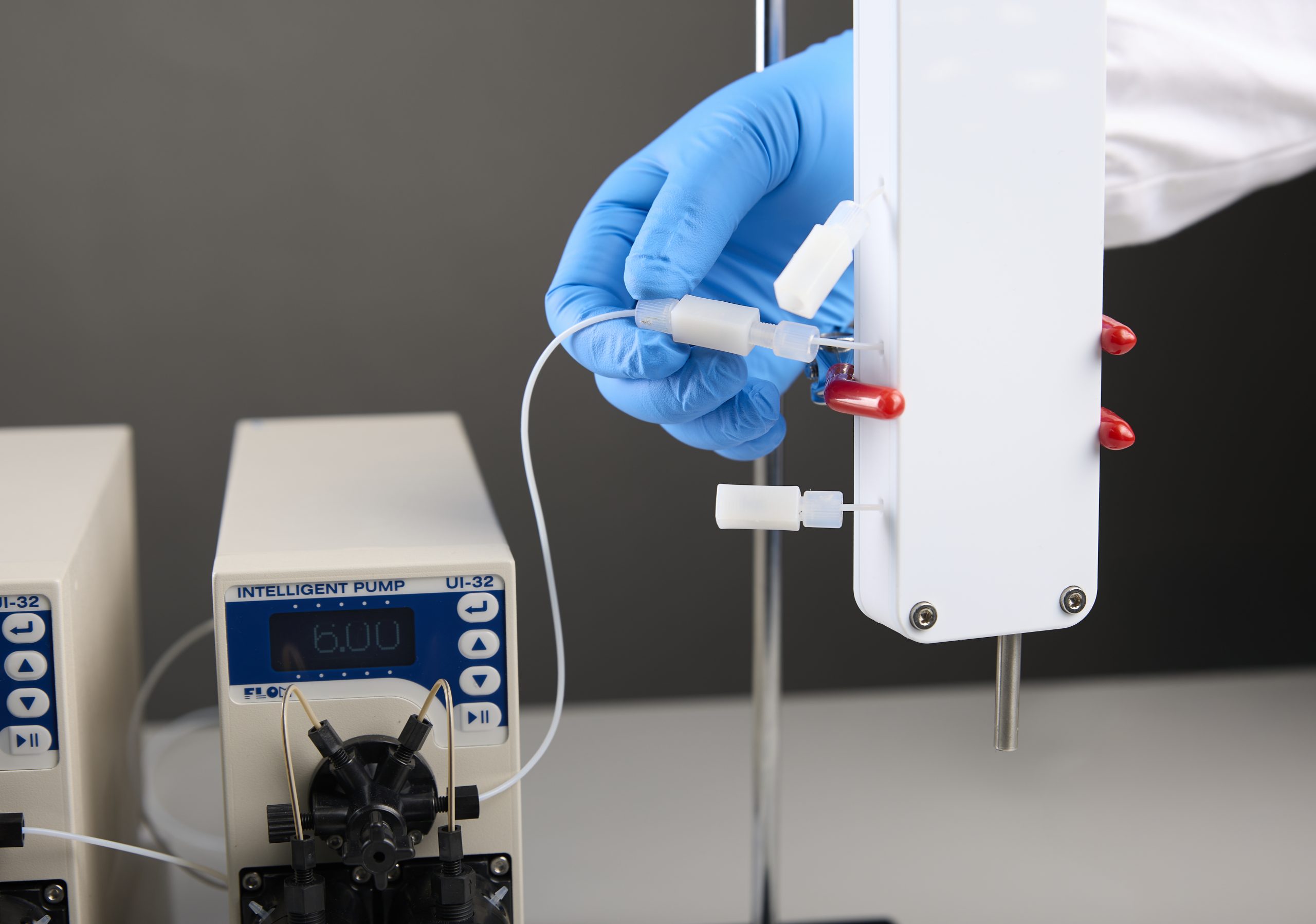
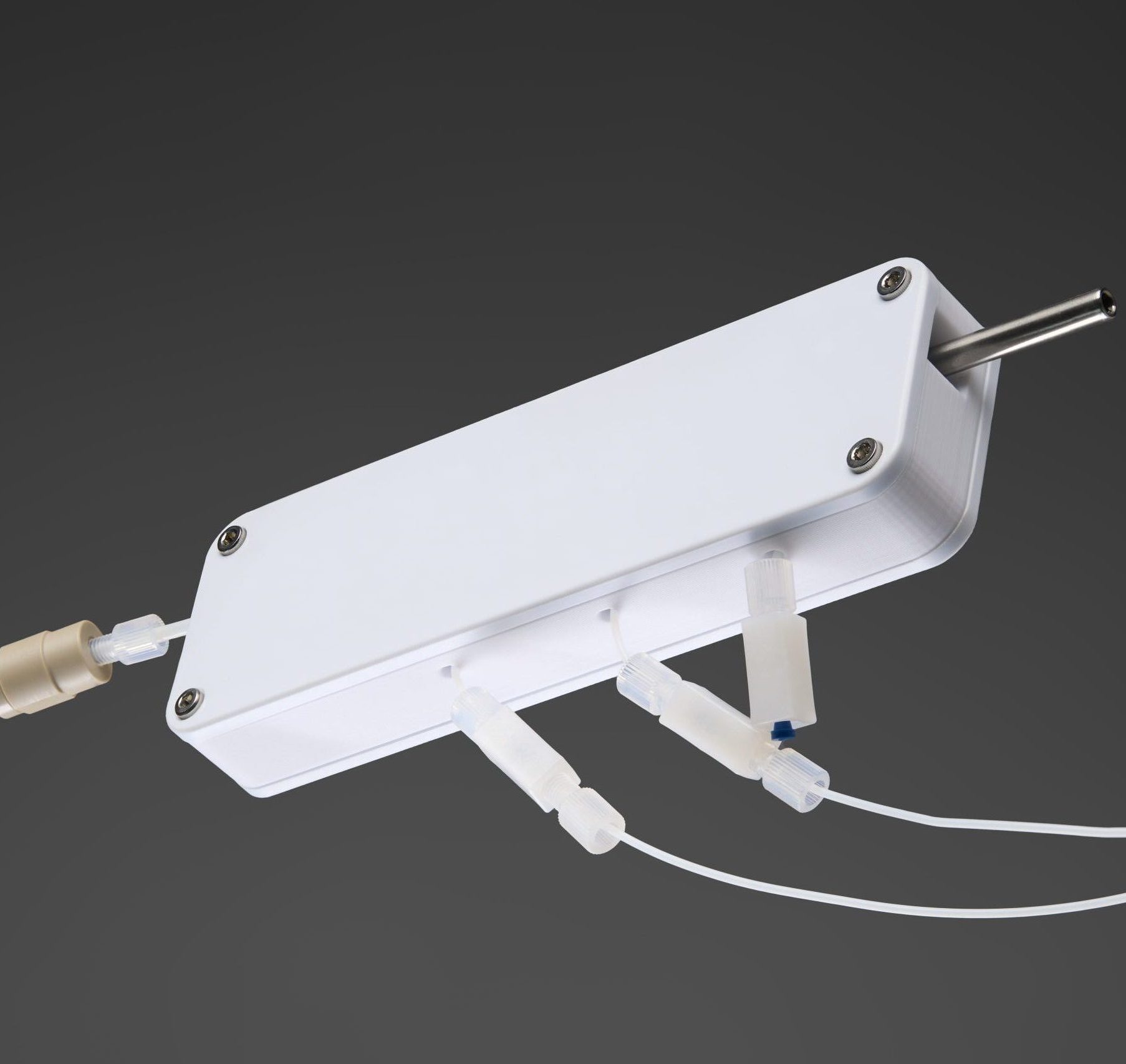
Product photography

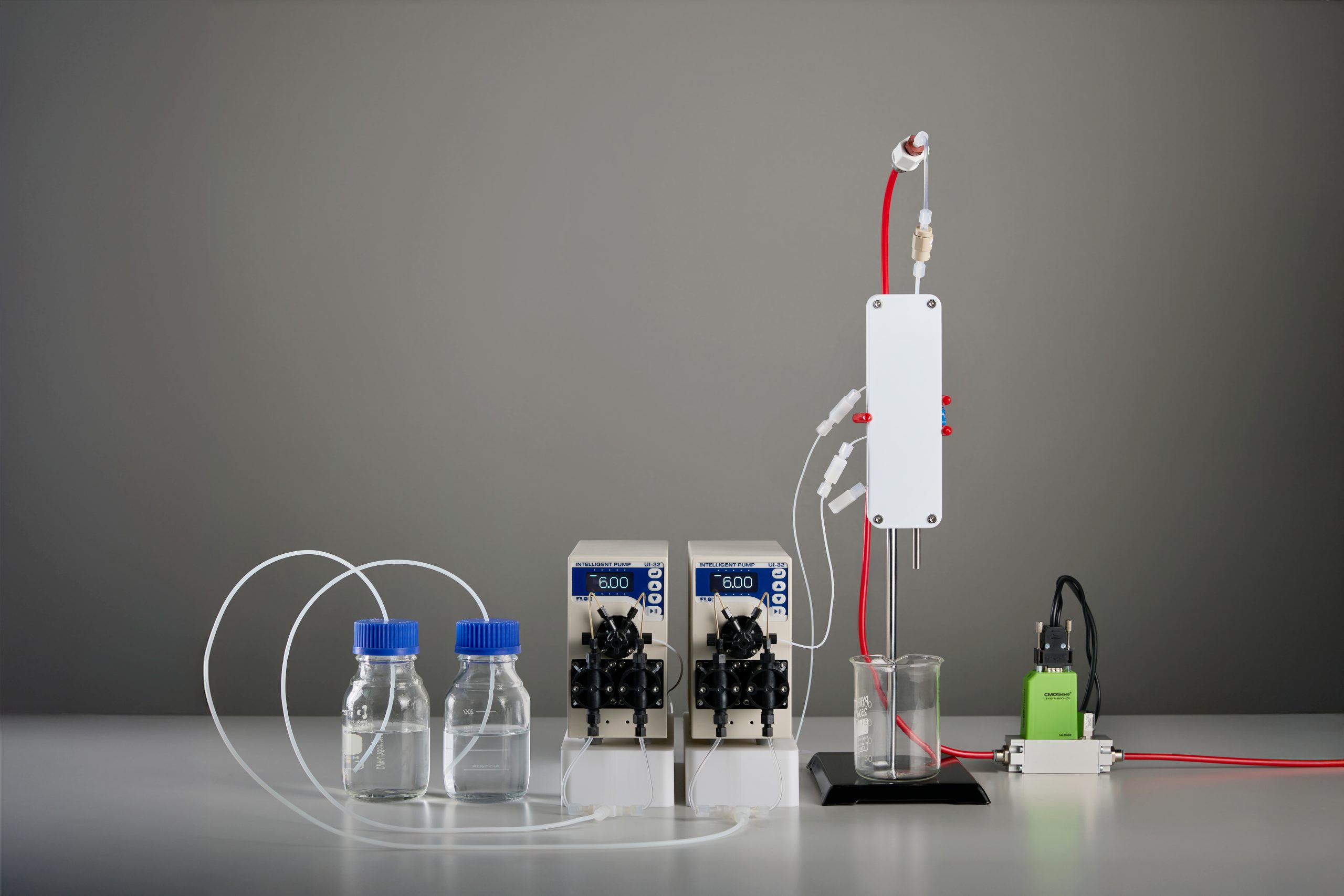
K1 Start system configurations

Capabilities and outcomes

Engineering features connected to results.

Best for laboratory teams screening chemistries, developing new nanomaterials and preparing recipes for pilot-scale evaluation.

High-shear annular flow

Rapid micromixing and precisely controlled hydrodynamics for reproducible material development.

Straightforward lab operation

Two-reagent dosing and operator-led changeover support purposeful, well-controlled early R&D.

Process continuity

Develop a recipe with a clear route to K10 pilot trials and manufacturing.
Next steps

Evaluate the product with your actual material.

Specify your target particle characteristics, existing method, material quantity and project timeline. AM can advise on fit, technical trials and procurement.

Request a technical meeting

Discuss reaction chemistry, available data and process objectives.

Plan a feasibility trial

Explore sample generation, quality criteria and pilot transfer.

Request a quotation

Scope hardware, software, controls and associated services.

Let's discuss your material

Know your target material. Not sure which reactor?

Speak with AM about your application, specification, stage and timeline. The initial discussion is the fastest route to the right technical scope.

Get in Touch

This field is for validation purposes and should be left unchanged.